On the Record · Kiko
The Jury Said Lesser. The Court Said Twenty-Five.
José "Kiko" Vecino was sixteen when the state brought its case. A Miami-Dade jury convicted him of a lesser included offense. The court declined the youthful-offender sentence the law still allowed — and wrote the statutory maximum instead.
The Pen Champions newsroom · Century, Florida — · 12 min read
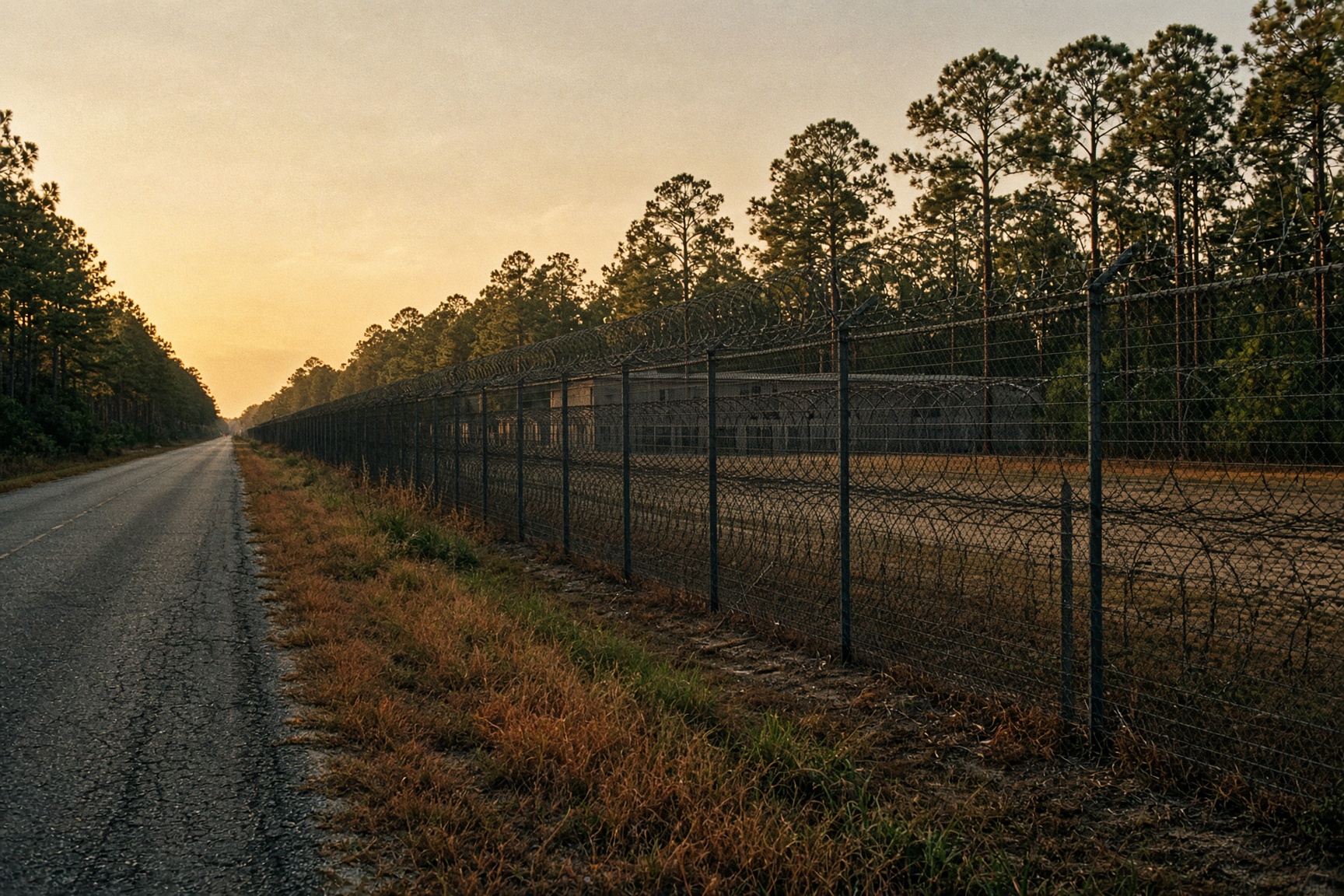
Century, Florida, is a pine-and-wire town on the Alabama line, as far from Miami-Dade as you can get without leaving the state. That is where the Department of Corrections has put José Vecino. The people who still write to him call him Kiko. He was sixteen when the offense the state charged was alleged to have happened. He is a man now, doing a man's maximum for a verdict that was not the one the state asked the jury to return.
The public record, as Pen Champions has it, is this. The case is a Miami-Dade case. The year of the offense is 2015. The conviction came in 2017. The jury did not convict him of the offense as charged. It convicted him of a lesser included. In the ordinary language of a courtroom, that is the jury declining to go where the state wanted to go. It is not an acquittal. It is also not a blank check to the bench.
What the court did with that verdict is the reason Kiko is on this page.
Florida still had — still has — a youthful-offender statute. Chapter 958 exists because the legislature, even this legislature, once admitted that a child is not a finished person, and that a court may, in the exercise of judgment, write a sentence that is not the adult maximum. A youthful-offender sentence tops out at six years. Six. The court in Kiko's case had that option in front of it. The court did not take it.
The jury wrote a lesser included. The court wrote the statutory maximum. Twenty-five years in prison. Five years of probation after that.
Twenty-five years in prison. Five years of probation after that. The statutory maximum of the lesser included offenses of conviction — as if the jury's refusal of the top count were a detail, and the only number that mattered was the largest number still available on the verdict form that survived.
We are being careful with what we do not know. We are not going to invent the original charge, or put words in the prosecutor's mouth, or name a judge the file has not yet given us leave to name. We will say what the sentence says. A sixteen-year-old was tried as if the adult code were the only code that applied. A jury pulled the case down. A court pushed the sentence back up to the wall. The youthful-offender door — six years — stayed closed.
What a lesser included is for
A lesser included offense is not a clerical category. It is the jury doing the one job the Constitution actually assigns it: deciding what was proved beyond a reasonable doubt, and what was not. When a jury convicts on a lesser included, it is not inviting the court to sentence the top count anyway. It is drawing a line. The state's proof, the jury is saying, reached here. Not there.
Judges are not required to like a verdict. They are required to sentence the conviction they have, not the case they wish they had. In a system that still pretended to be a system of judgment, a sixteen-year-old with a lesser included would have been the textbook candidate for the youthful-offender statute. The statute is not clemency. It is a tool the legislature left on the bench. Leaving it there, unused, in favor of a twenty-five-year maximum, is a choice. Choices have authors.
There is a habit in this state of talking about "the sentence" as if it fell out of the statute unaided. It did not. Someone looked at a child, looked at a jury that would not go the distance, looked at six years, looked at twenty-five, and signed twenty-five. That is not the law running on its own. That is a person using the law as a maximum and calling the maximum inevitable.
From Miami-Dade to Century
Kiko is from Miami-Dade. He is housed at Century Correctional Institution in the far northwest of the state — a transfer that is a geography lesson in how Florida treats the people it has decided to keep. The visiting room, if you can get to it, is a day's drive from the county that convicted him. The pine woods do not care about a lesser included. The count does.
He has been inside since a conviction in 2017. He will be inside, on this sentence, into the years when the sixteen-year-old would have been a man long finished with a six-year youthful-offender term. That is the arithmetic the court chose. It is also the arithmetic this newsroom is putting on the front page, because a sentence that starts in childhood and is built to outlast the point of the verdict is not a footnote. It is the story.
Pen Champions is not asking anyone to take our word for a biography. We are asking them to look at the structure. Age at offense: sixteen. Verdict: lesser included. Tool available: youthful offender, six years. Tool used: statutory maximum, twenty-five plus five. Housing: Century C.I. That is the record. The record is enough.
Why he is this month's name
Every month this newsroom will put a person next to the state. The State of Injustice is a jurisdiction. On the Record is a life that jurisdiction is using. They are the same story told from two ends of the sentence.
Kiko's case is not a PRR case, and we will not force it into this month's Florida legal argument just to make the ribbon neat. It belongs here for a different, plainer reason. It shows what happens when a court decides that the jury was a preliminary hearing. The jury pulled the case down. The court wrote the largest number left. A child-sentencing statute sat on the table and was not used. If you want to know what "discretion" means in Florida when a court still has it, look at how it was spent.
And if you want to know why Pen Champions exists — why the work is post-conviction, why the writers of this record include people the system has already run through — look at who is left to read Kiko's file. Trial is over. Direct appeal, if it was taken, is not where the next ten years will be won. The sentence is the case now. Someone has to treat it that way.
We will keep his name on this page until the page is used up. José Vecino. Kiko. Sixteen when the state began. Twenty-five years when the court finished. Century C.I. On the record.